



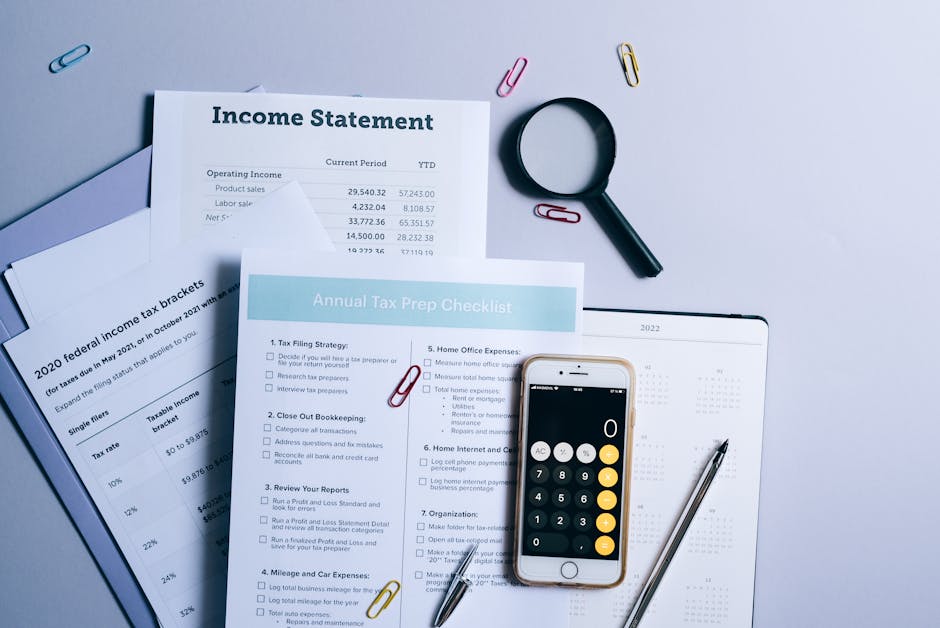
UAE Tax Residency Proof in 2026: The Documents That Actually Hold
If you are relocating to Dubai or elsewhere in the UAE, tax residency is rarely decided by intent. This guide focuses on the proof trail that banks, auditors, and home-country tax offices tend to test, plus the practical setup steps that make the file coherent.
Use your browser search or scroll to sections below.
Morning: you are at a bank branch in Dubai, updating KYC for a new account. The relationship manager nods at your Emirates ID, then asks for “proof of address” and “source of funds,” and casually adds that compliance may request your tax residency position as well.
Afternoon: your old-country accountant emails a checklist asking for a residency certificate, day-counts, and evidence you have actually moved your life. You realize the problem is not one form, it is whether your documents tell a consistent story across immigration, housing, banking, and family ties.
Tax residency in practice: it is a story your documents must support
The proof problem most new arrivals underestimate
People often treat UAE tax residency as a day-count exercise. In reality, day-counts are only one layer, and they are easy to challenge if the rest of your life still points elsewhere.
In 2026, the practical friction point is evidence. Banks, auditors, and home-country tax offices frequently ask for overlapping proof: where you live, why you are there, how you earn, and whether you still have a “centre of life” outside the UAE.
- Expect multiple parties to review the same facts: bank compliance, your employer/pro, your home-country tax adviser, sometimes your landlord
- Assume you will need duplicates in different formats (PDF, stamped copies, translations) depending on who asks
- Build one “master file” and reuse it instead of reacting to each request
Trade-off: TRC focus vs broader residency defence
Some movers optimize for obtaining a Tax Residency Certificate (TRC). Others optimize for defending residency under their home-country rules first, then treat TRC as supporting evidence.
TRC-first fits people whose counterparties explicitly require the certificate (for example, a foreign bank or a tax authority request tied to treaty relief). Defence-first fits people coming from jurisdictions with aggressive tie-breaker tests, where housing, family, and work patterns matter as much as certificates.
- TRC-first: you plan around UAE paperwork timelines and the application bundle, then align the rest to match
- Defence-first: you plan around home-country “ties” (home, spouse/kids, work location), then gather UAE proof to support the shift
- Either way, inconsistency is what triggers long email threads and additional document demands
Your UAE proof stack: what usually gets asked for and why
Identity and immigration proof (the base layer)
Your visa status and Emirates ID are the start, not the finish. Reviewers often want to see continuity: entry history, current residency validity, and that your residency path matches your work or business activities.
If you are on an investor/founder route, the supporting company documents matter. If you are on an employment route, HR letters and salary flows matter. If you sponsor dependents, family documents become part of the residency narrative.
- Passport copy and current UAE residence visa page or e-visa
- Emirates ID (front/back) once issued
- Entry/exit movement report if requested (useful when day-counts are disputed)
- For employees: employment contract or HR letter stating role and UAE work location
- For founders: trade license and establishment card, plus basic ownership proof
Housing proof (the layer that banks and tax offices love)
A long-term lease and an Ejari registration (Dubai) often do more work than people expect. They show an anchored place to live, which helps when another country claims you still have a home there.
Short-term accommodation is workable early on, but it makes your file weaker for anything beyond basic onboarding. If your goal is to demonstrate a real move, align your housing timeline with your visa and banking timeline.
- Signed tenancy contract plus Ejari (or equivalent registration in other emirates)
- DEWA/utility account opening confirmation (or latest bill once available)
- Move-in documents: handover letter or landlord/agent acknowledgment if you have it
- If you are still abroad often: keep evidence of UAE usage (utility consumption patterns can sometimes be requested in disputes)
Financial and “centre of life” proof (where files fail)
Most challenges happen here. A person can have a UAE visa and still look economically tied elsewhere if income, management decisions, investments, and family life remain outside the UAE.
Banks also approach this from a different angle: they want to understand source of funds and ongoing activity. Their KYC questions can inadvertently create a record that conflicts with the tax story you are trying to tell, so keep it consistent.
- UAE bank statements showing local spending patterns and salary/business inflows
- Salary certificates or invoices/contract proofs for business income
- Insurance policies (health cover in the UAE is a strong practical tie, especially for families)
- School letters or nursery invoices if relocating with children
- Evidence of winding down the prior country’s ties where relevant (lease termination, deregistration, change of address, etc.)
What to prepare before you arrive (so you do not lose weeks later)
Pre-arrival document block (keep it boring and complete)
The easiest way to stall tax residency planning is to arrive with half the civil documents unprepared. Re-issuing documents from abroad, arranging attestations, or fixing name mismatches can drag on while your visa and housing tasks are waiting.
Prepare a clean set of documents in the exact names you will use in the UAE. If your passport name and your marriage certificate differ, fix or explain it before it becomes a bank compliance issue.
- Birth certificates and marriage certificate (if sponsoring family), plus any required attestations
- University degree certificate if your visa/work route needs it, plus attestations if applicable
- Current bank statements and proof of source of funds (sale agreement, dividends, business accounts) for KYC
- Prior-country tax numbers and last filed returns (useful when auditors ask for transition years)
- Digital folder with consistent filenames and dates, plus scanned color copies
Decision criteria: pick a residency route that matches your proof needs
Visa choices and tax proof are linked. For example, an employment visa gives you a straightforward income trail, while a founder/investor route can be cleaner for independence but can trigger deeper bank questions about business substance and counterparties.
If you expect scrutiny from a home-country tax authority, choose the route that produces the strongest, simplest evidence you can maintain for a full year.
- If you need predictable payslips and HR letters: employment route tends to be simpler
- If you need flexibility and will invoice internationally: founder route can work, but plan for more KYC
- If family relocation is central: ensure your sponsor route supports dependents smoothly
- If housing is delayed: consider how you will produce proof of address for banks and applications
Common failure points and how to reduce rework
Where applications and reviews get stuck
Most “rejections” are not dramatic, they are silent delays. A bank puts the account on hold pending one extra document. A TRC application is returned because the address proof does not match the Emirates ID record. A home-country adviser flags that you still have a usable home there.
Treat this like project management. Track dates, versions, and what you told each counterparty.
- Name mismatch across passport, lease, Emirates ID, and bank profile
- Lease not registered (no Ejari) or Ejari shows a different unit than the contract
- Using a friend’s address or a short-term hotel letter that a bank refuses
- Source of funds not documented, especially for large inbound transfers
- Day-counts that rely on memory instead of movement records
Mini-case: the file that looked fine until KYC asked one extra question
A couple moved to Dubai with a clear plan: visa, lease, and school registration. The bank still paused their joint account because most funds arrived from an overseas company where the spouse remained a director, and the explanation letter did not match the corporate documents.
They resolved it by documenting the role change, providing updated corporate filings, and aligning income narratives across their adviser, the bank’s KYC form, and their UAE residency evidence. It cost them three weeks and a missed property payment deadline, but the fix was mostly about consistency, not new information.
- If you are changing roles abroad, document the change formally and keep copies
- Write one “source of funds and activities” memo you can reuse across requests
- Avoid last-minute large transfers right before a major deadline (rent cheque, school fees) if your KYC file is not ready
A realistic 30–90 day execution plan (visa, housing, banking, then tax proof)
Weeks 1–4: get the anchors in place
Your first month is about anchors: residency status, a stable address, and a bank account that can actually be used. If you do these out of order, you often create circular dependencies where each provider waits for another provider’s document.
If your housing will take time, plan for temporary proof options that banks accept, but keep pushing toward a proper lease registration.
- Start residency process and track medical/EID steps via your sponsor or PRO
- Open a bank account early, but expect KYC back-and-forth
- Secure a lease you can register (Ejari in Dubai) and keep stamped copies
- If relocating with family: line up attested certificates before dependent visas
Weeks 5–12: make the proof coherent and defensible
Once you have the basics, focus on coherence. Align your declared work situation, your banking activity, and your actual presence pattern. This is also the window to create a clean “residency pack” you can hand to advisers and reuse during reviews.
If you run a company, start compliance hygiene early. A messy corporate file becomes a tax residency risk when banks or auditors start pulling threads.
- Create a residency pack: EID, visa, lease/Ejari, utilities, bank statements, employer/company docs
- Maintain a day-count log backed by travel records
- If a business is involved: keep license, invoices, and basic bookkeeping tidy from day one
- For families: keep school fee receipts and insurance records in the same pack
Where to use SVAN resources in your plan
If you want deeper checklists by topic, keep them separated but cross-referenced. Tax residency proof becomes easier when your visa route, housing paperwork, and banking approach are not improvised.
Use topic guides when you hit a bottleneck rather than restarting the whole plan.
- Tax and proof planning: https://svan.ae/en/tax
- Residency routes and document sequencing: https://svan.ae/en/visas
- Lease, Ejari, and utilities setup: https://svan.ae/en/housing
- Family documents and dependents: https://svan.ae/en/family
- Founder/company setup implications: https://svan.ae/en/company
Next steps
- Create a single residency proof folder and list what is missing (visa, Ejari, bank, work/company docs).
- Choose your primary “anchor” for the first 60 days: employment trail or founder trail, and align documents accordingly.
- Book a weekly admin slot to update day-counts and file new statements, receipts, and letters.
FAQ
Is being in the UAE for 183 days enough to prove tax residency?
It helps, but it is not a universal shield. Day-counts can be questioned if your housing, family life, and economic activity still look centred elsewhere. Treat days as one part of a broader proof file that shows you genuinely live in the UAE.
What documents do banks usually accept as proof of address in Dubai?
Typically an Ejari (Dubai tenancy registration) is the cleanest option. Some banks may accept a tenancy contract plus utility evidence, but acceptance varies by bank and profile. If you are still on temporary accommodation, ask the bank in writing what they will accept before you rely on it for a deadline.
My Emirates ID is delayed. Can I still start building a tax residency proof file?
Yes. You can prepare attested civil documents, secure housing that can be registered, keep travel evidence, and begin banking/KYC preparation. But expect some steps to pause without EID, especially banking and certain applications, so plan buffers.
Do I need a Tax Residency Certificate (TRC) to be considered a UAE tax resident?
Not always. TRC is a document you may use to support your position with third parties, but residency is usually assessed based on rules and facts. If a counterparty explicitly demands a TRC, work backwards from the certificate requirements and ensure your supporting documents match.
I have a UAE company. Does that automatically make me a UAE tax resident personally?
No. A company structure can support your UAE presence, but personal tax residency depends on your own facts: where you live, where your family is, where you spend time, and where you manage your affairs. Also, company banking and compliance can create records that need to match your personal narrative.
What are the most common reasons a tax residency certificate application gets returned or delayed?
Common issues include inconsistent addresses, unclear or incomplete supporting documents, and missing stamps or required formats. The quickest improvement is usually tightening consistency: the same address and name across lease/Ejari, Emirates ID record, and bank profile.
If I relocate with my family, what extra proof should we keep?
Family moves often create strong evidence, but only if you keep the paperwork. School admission letters, fee receipts, dependent visas, and UAE health insurance records help show your day-to-day life is in the UAE. If one spouse travels heavily, keep individual travel records and avoid mixing assumptions across the family.
Photo credit: Pexels — Leeloo The First
This article is general information for UAE relocation planning and is not tax or legal advice. Tax residency outcomes depend on your personal facts and the rules of all relevant jurisdictions, and requirements can change or be applied differently by banks and authorities.