



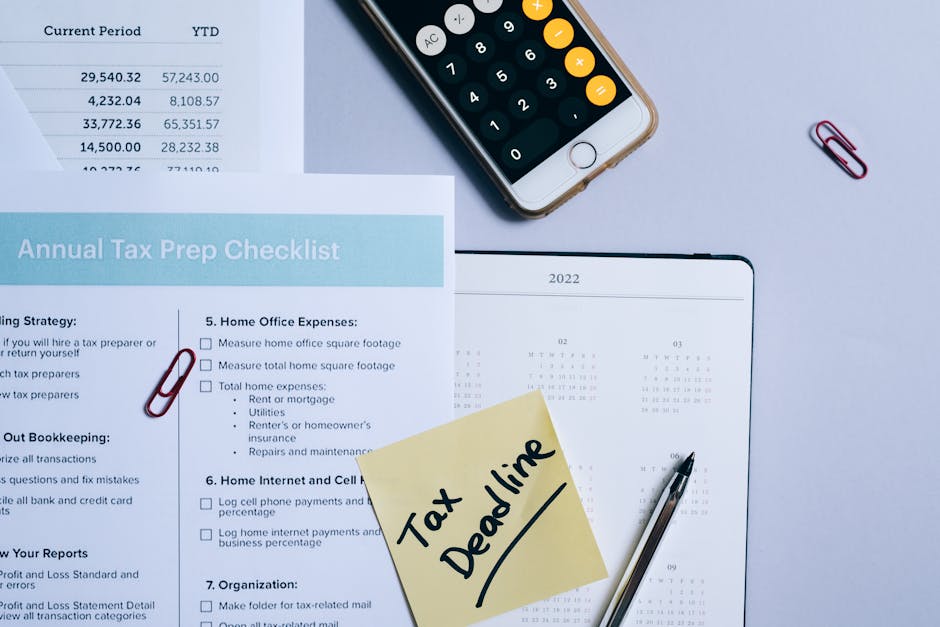
UAE Tax Residency in 2026: A Practical Exit-and-Proof Checklist
If you’re relocating to Dubai for tax reasons, the hard part is rarely the move. It’s proving your new center of life while cleanly unwinding the old one. This guide breaks down what to prepare, what to document in the first 90 days, and where people get stuck.
Use your browser search or scroll to sections below.
Wednesday, 9:10 am: you’re at a bank branch on Sheikh Zayed Road with a folder you thought was complete. The relationship manager flips through your passport copies, Emirates ID application receipt, and a lease.
Then the pause: “We need proof you actually live here. Also, what’s your tax residency status and source of funds?” You came to open an account, but you’re suddenly defending a whole relocation story.
What “UAE tax resident” means in practice (not marketing)
Two tracks: legal status vs evidence file
In 2026, most relocation plans fail at the same point: you have a UAE residence visa, but you cannot demonstrate that the UAE became your real base and that you loosened ties elsewhere. Tax offices, banks, and sometimes schools ask for coherent proof, not just one document.
Think in two tracks you build in parallel: (1) your UAE immigration and housing footprint, and (2) your “story file” that shows where you live, work, manage money, and spend time. The second track is what prevents awkward questions later when you apply for a Tax Residency Certificate (TRC) or respond to home-country queries.
- Status documents: residence visa, Emirates ID, entry/exit record, dependent visas if applicable
- Footprint documents: Ejari/tenancy contract, DEWA utility account, mobile plan, local bank statements
- Economic tie documents: employment contract, company license, invoices, salary payments, board minutes if relevant
- Consistency check: addresses and names match across documents (including middle names and transliterations)
Trade-off: day-count strategy vs ties-and-substance strategy
You will hear two simplified approaches: “just hit the day count” versus “build substance.” In reality, you choose a blend based on your risk profile and the scrutiny you expect.
Day-count-heavy planning fits someone with simple affairs (one income stream, no operating company, no high-profile exit). Substance-heavy planning fits founders, HNW families, and anyone leaving a country that challenges residency exits, because ties matter as much as days.
- Day-count-heavy: simpler admin, but fragile if your old country argues you kept your center of life there
- Substance-heavy: more work upfront, but stronger for banks, TRC requests, and home-country challenges
- If you have a spouse/kids, school enrollment and housing stability often become the most persuasive “substance” (see family and housing links below)
What to prepare before you arrive (so you don’t lose weeks)
Pre-arrival document pack that actually gets used
The UAE side often moves fast when documents are clean, but delays compound when you need attestations or when bank compliance asks for papers you left at home. Prepare a pack you can hand to PRO services, landlords, and bank KYC without reprinting your life story each time.
If you’re relocating as a founder, prepare both personal and company narratives. Banks and counterparties want to understand why money moves the way it moves.
- Passport: clear scan, valid for a comfortable runway; keep old passports if they show travel history
- Civil status: marriage certificate and kids’ birth certificates (attestation requirements vary by origin and purpose)
- Education/profession: degree certificates if your visa/work category may require them
- Income proof: payslips or dividend proofs, contracts, client agreements, audited accounts if applicable
- Source of wealth: asset sale documents, inheritance documents, long-term savings trail if relevant
- Address continuity: a short note listing your last 2–3 addresses and dates (helps with KYC forms)
Common failure points before Day 1 in Dubai
Most “tax residency” delays aren’t tax delays. They are document chain issues that block the practical steps that create proof: lease, utilities, bank account, visa stamping, and consistent address records.
If you anticipate a clean exit from your prior country, coordinate dates and cancellation steps early rather than after you sign a Dubai lease.
- Unattested marriage/birth documents delaying dependent visas (visas + family impact)
- Name mismatch across documents (missing middle name, different spelling) causing bank KYC back-and-forth
- Arriving without a plan for a residential address, then struggling to open utilities and update records (housing impact)
- No written explanation of business model and counterparties for founders, triggering enhanced bank reviews (company impact)
Your first 90 days: build the proof file while you set up life
A realistic sequence that avoids rework
In practice, you want a loop where each step unlocks the next: visa process enables Emirates ID, which supports leasing and banking, which produces statements, which strengthens your evidence file. The order varies by visa route, but the dependencies are consistent.
Don’t aim for perfection in week one. Aim for momentum with clean documentation and consistent addresses.
- Visa route selected and initiated (employment, investor/founder, family sponsorship): https://svan.ae/en/visas
- Emirates ID and medical steps scheduled; keep appointment confirmations and receipts
- Housing: sign a lease you can register (Ejari) and keep all pages signed; start here: https://svan.ae/en/housing
- Utilities: open DEWA (or relevant emirate utility) and keep the account confirmation
- Banking: open at least one account and keep the first statements; expect KYC questions
- Family: if applicable, start school admissions and dependent visa paperwork early: https://svan.ae/en/family
Mini-case: the lease that didn’t count for proof
A couple relocated on a tight timeline and rented a serviced apartment month-to-month. They had a residence visa and plenty of days in the UAE, but their bank asked for Ejari and a stable address to proceed with a higher account tier and investment onboarding.
They ended up signing a 12-month lease mid-year, redoing address updates across accounts, and explaining the transition in writing. Nothing was “wrong,” but the proof trail looked messy and cost them time.
- Serviced apartments can be convenient early on, but may not produce the same evidence as a registered long-term tenancy
- If you do temporary housing first, document the move-in and move-out dates and keep invoices
- Keep one “address log” to update banks, telecoms, schools, and insurers consistently
Evidence you should collect automatically (make it boring)
The easiest proof is the proof you collect without thinking. Set up a digital folder structure from day one and drop documents into it monthly. When you later need a TRC, answer a bank query, or respond to a home-country letter, you are not reconstructing your year from screenshots.
If you run a company, align personal and company documentation. A mismatch between personal residency claims and company operations is a common trigger for questions.
- Monthly: bank statements, utility bills, telecom bills, tenancy payments receipts
- Quarterly: flight summaries, entry/exit stamps copies, calendar of days in/out
- Annually: lease renewal, school letters (if applicable), insurance renewals
- Company owners: license copy, office lease/co-working contract, invoices, proof of active contracts: https://svan.ae/en/company
Leaving your old tax residency: the exit steps people skip
Decision criteria: how hard will your old country push back
Some countries are relaxed when you leave; others actively challenge departures, especially when you keep property, a spouse, or an operating business there. Your approach should be proportionate to your exposure and the local rules you remain subject to.
A practical way to think about it is: what ties remain, and can you explain them clearly without undermining your UAE narrative.
- Low challenge: you sold/terminated housing, moved family, changed employment, minimal local presence
- Medium challenge: you keep property rented out, retain a board role, or visit frequently for work
- High challenge: spouse/kids remain, main business operations remain, or you keep a “primary home” available
Clean-exit checklist (adapt to your country’s rules)
A clean exit is mostly admin: close or convert accounts, update addresses, stop benefits that imply residence, and keep a dated paper trail. This is where people lose the argument later because they cannot show when their life actually moved.
If you are uncertain, document intent and actions. Tax disputes are often decided on facts and consistency, not on what you meant.
- Housing: terminate lease or sell; if keeping property, document it as an investment (rental contract, agent management)
- Employment/business: end employment contract or update to non-resident arrangement; document board minutes and management location if relevant
- Government records: deregistration steps if your country has them; update address with tax authority where applicable
- Banking: update residency status and address; avoid leaving accounts coded as resident if you claim you left
- Family: update school records, medical providers, and insurers to reflect the move
TRC expectations and audit-proof habits
When a TRC helps and when it doesn’t
A UAE Tax Residency Certificate can be helpful for treaty access and for demonstrating residency to banks and counterparties. But it is not a magic shield if your facts don’t support the story, or if your previous country applies its own domestic tests and tie-break rules.
Treat the TRC as the output of your documentation, not the starting point. If you’re building your file, start with the basics on UAE tax and compliance: https://svan.ae/en/tax
- Helps: treaty claims (case-by-case), formal confirmation for institutions, structured proof for your records
- Doesn’t fix: weak ties evidence, inconsistent addresses, or a home country asserting you never left
- Timing is shaped by your residency status, documentation readiness, and administrative processing
Common reasons people get stuck (and how to reduce friction)
Most problems are avoidable if you treat compliance like a monthly routine. The goal is not to collect everything, it’s to collect the right things consistently and in a format you can share.
Also expect banks to ask questions that feel unrelated to tax residency. In reality, KYC and tax status are intertwined, especially for cross-border clients.
- Inconsistent address across Emirates ID, tenancy, and bank profile
- No registered tenancy (Ejari) or weak housing documentation
- Company owners with no clear business activity trail, invoices, or counterparties
- Day counts tracked loosely with missing travel records
- Dependents in another country, making “center of life” hard to defend without careful explanation
Next steps
- Build a pre-arrival document pack and resolve attestations before booking flights.
- Pick your UAE visa route and map the dependency order: visa, Emirates ID, lease/Ejari, utilities, bank.
- Start a monthly “proof file” folder and save statements, bills, and travel records from day one.
FAQ
Do I need 183 days in the UAE to be a tax resident in 2026?
Not always, and the practical answer depends on which test you are using and what you need to prove it to. Many people focus on 183 days because it’s easy to understand, but banks and tax authorities often look at your overall facts: housing, family location, work or business base, and where you manage your finances. If you expect scrutiny, build a proof file that still makes sense even if your day count is close to a threshold.
Is a residence visa enough to prove I moved my tax residency to Dubai?
A residence visa is necessary for most people, but it is rarely sufficient by itself. In practice, you’ll be asked for evidence of living arrangements (Ejari/tenancy, utilities), banking activity, and a consistent address history. If you keep major ties in your previous country, you may also need a clean exit trail that shows when and how you stopped being resident there.
What documents do banks usually ask for that catch new residents off guard?
Banks often ask for documents that connect your income and assets to a clear story. Common requests include: source of funds/source of wealth documents, employment or client contracts, company license and invoices (for founders), proof of address (often Ejari plus utility bill), and sometimes an explanation letter describing your business model and expected account activity. If your name spelling differs across documents, expect extra back-and-forth.
Can I rent short-term first and still build a strong residency proof file?
Yes, but treat it as a transition and document it. Keep the invoices and contracts for the short-term stay, then move to a long-term tenancy you can register where possible. Many institutions treat a registered tenancy and stable address as stronger proof than a serviced apartment booking, especially when you later update your bank profile or apply for formal residency confirmations.
How do dependent visas and school enrollment affect tax residency proof?
They can materially strengthen the “center of life” narrative, but they can also create questions if the family remains abroad. If your spouse and children relocate, school letters, dependent visas, and local medical/insurance records help show substance. If they stay behind, be ready to explain why, for how long, and what you did to establish your own primary home and routine in the UAE.
I set up a UAE company. Does that automatically make me a UAE tax resident?
No. A company license supports your economic ties, but it doesn’t automatically establish your personal tax residency. You still need personal residency status and an evidence trail that you live and operate from the UAE. Also, company setup adds compliance expectations and banking scrutiny, so align personal and company documentation to avoid contradictions.
Photo credit: Pexels — Leeloo The First
This article is general information, not tax or legal advice. Tax residency rules and evidence requirements vary by person, emirate, and home country. Get qualified advice for your specific facts before making residency or exit decisions.