



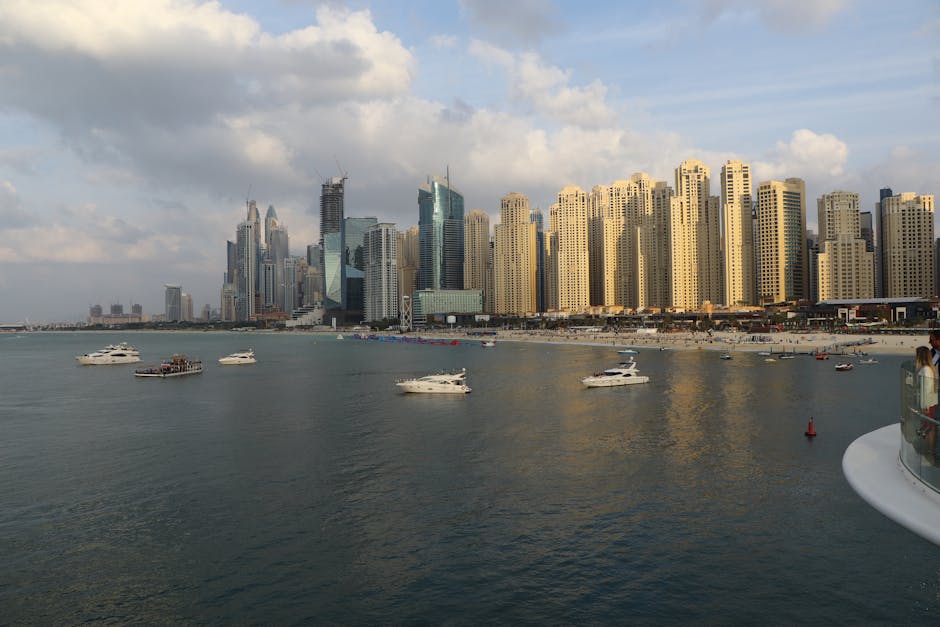
UAE Residency in 2026: A Route Decision Guide for Real Life Paperwork
A practical way to choose a UAE residency route in 2026, with what to prepare before arrival, where timelines slip, and the failure points that cause rework with ICP, employers, banks, and landlords.
Use your browser search or scroll to sections below.
09:10: you’re at an Amer counter with a numbered ticket, holding a passport copy, a tenancy contract draft, and a phone full of PDF scans. The clerk asks for your entry status printout and a “clear” passport photo, then points out your mother’s name doesn’t match across two documents.
12:40: you’re at a typing center redoing an application because your employer’s PRO says the job title needs to match the labour permit exactly, not “close enough.” Your landlord is waiting for the residency and Emirates ID to finalise Ejari, and the bank appointment is next week but they want proof of address you do not have yet.
Start with the route that fits your constraints (not your preference)
A quick decision screen: what is your sponsor and what do you need right away
In 2026, most people still end up in one of a few practical buckets: employer-sponsored, self-sponsored via a company, family-sponsored, or long-term residency options where eligible. The cleanest route is usually the one that matches your real constraints: how fast you need a bank account, whether you must sponsor dependents soon, and whether you need a tenancy contract in your own name.
Before you compare fees or durations, write down the two things that create the most rework: who can legally sponsor you, and what third parties will demand as proof (banks, landlords, schools, insurers). A visa route that looks “simpler” can be slower in practice if it leaves you without the documents others require.
- If you need salary-based banking quickly, employer-sponsored often aligns better with bank KYC expectations
- If you need to sponsor family early, check whether your route allows dependent sponsorship immediately or after a status change
- If you must sign a lease, confirm whether the landlord will accept a pending visa, and whose name must be on Ejari
- If you are starting a company, separate the business setup timeline from the residency timeline so you do not assume they move together
Trade-off comparison: employer visa vs self-sponsored (company-linked) residency
Employer-sponsored residency tends to be operationally straightforward when HR/PRO is responsive, because the employer is the sponsor and usually drives approvals and scheduling. The trade-off is dependence: if the job ends, you may have a tight window to cancel and transition, and your family’s status can be tied to yours.
Self-sponsored residency (commonly via your own company) can offer more control over your timeline and independence from an employer. The trade-off is admin load: you coordinate establishment cards, immigration files, medicals, biometrics, and ongoing compliance, and banks can ask more questions about source of funds and business activity.
- Fits you if you want predictable HR handling: employer-sponsored
- Fits you if you need independence and can handle admin and compliance: self-sponsored
- High-friction area for both: bank KYC and proof of address sequencing
- Plan an exit path: cancellation steps and grace periods should be understood up front
What to prepare before you arrive (the file that prevents re-typing)
Document pack that survives multiple counters
Most delays are not “rejections,” they are document mismatches, missing attestations, or scans that fail a system check. Build one master folder with consistent naming and a second folder of “clean” copies you can hand over without hunting through your camera roll.
If your name is spelled differently across passports, birth certificates, or prior visas, fix what you can before you travel. Where you cannot fix it, prepare supporting evidence and be ready for extra attestations and translations depending on the use case (family sponsorship is where this shows up most).
- Passport copy (clear, full page), and a separate scan of the signature page if applicable
- Entry status / visit visa details and a PDF of your flight entry stamp if you have it
- Passport photo that meets typical UAE requirements (keep multiple copies and a digital version)
- Marriage certificate and children’s birth certificates if family sponsorship is likely (attestation requirements vary by issuing country and use)
- Highest education certificate if your employer route depends on role classification
- Proof of address from your home country (recent utility/bank statement) for bank KYC bridging
- A one-page CV and a simple source-of-funds note if you expect enhanced bank questions
Sequencing reality: visa, Emirates ID, housing, banking
Many new residents expect the steps to be linear. In reality, you will often run these in parallel, and one missing item can freeze two other processes. Emirates ID issuance depends on biometrics, and biometrics appointments can bottleneck at busy times.
Housing and banking create a loop: banks often want proof of address, while landlords often want residency/EID before Ejari. If you anticipate this loop, you can plan a temporary accommodation strategy and pick a bank process that accepts alternative proofs while you wait.
- Ask the landlord upfront: will they issue Ejari with a pending visa, and whose name must be on it
- Ask the bank upfront: what can substitute for proof of address while waiting for Ejari
- Budget time for: medical test, biometrics, and “re-typing” if a field does not match
- Keep spare time for PRO back-and-forth and employer signature cycles
Where timelines actually slip (and how to reduce rework)
Common failure points that cause returns and extra attestations
The most common problems are boring: a blurred scan, a cropped passport page, a different spacing in a name, or a document that is acceptable for one step but not for another. If you treat each counter as having its own standards, you will waste fewer days arguing that “it worked last time.”
For families, the friction is usually around relationship proof and consistency of names across family documents. For workers, it is often job title alignment and education documents. For founders, it is the split between the company’s immigration file and personal residency steps.
- Name mismatch across passport, marriage certificate, and child birth certificate
- Missing attestations or unclear translation for family documents
- Wrong photo format or photo rejected for background/size
- Employment documents not matching the visa application fields (title, employer name, licence details)
- Medical test or biometrics appointment delays during peak periods
- Bank KYC questions escalating due to unclear source of funds or inconsistent addresses
Mini-case: a “simple” family sponsorship that stalled for two weeks
A couple arrived planning to sponsor two children after the principal applicant’s residency was stamped and Emirates ID started. The application was paused because the mother’s name appeared with a different spelling on the children’s birth certificates than on the passport, and the school required residency proof by a fixed deadline.
They resolved it by obtaining a corrected translation and additional attestation for the birth certificates, while temporarily keeping the children on a visit status. The cost was not just fees, but rescheduled appointments and a rushed housing decision to secure an address document.
- Treat name consistency as a first-week task, not a “later” task
- Do not assume school deadlines align with visa processing reality
- Keep a buffer plan: temporary accommodation and visit status options if needed
When your visa route collides with family and housing timelines
If you are relocating with children: align school, dependent visas, and lease
In Dubai and other emirates, schools and nurseries can ask for residency-related documents, Emirates ID receipts, or passport copies at different stages. At the same time, dependent sponsorship may only be practical after the main applicant’s residency and Emirates ID process is underway.
Avoid committing to a long lease purely to produce an address document before you know your dependent sponsorship path is workable. If you must sign early, negotiate clauses carefully and confirm what the landlord and agent will accept as interim documentation.
- List each child’s required documents for admission and for visa medicals (if applicable)
- Confirm whether your chosen visa route allows dependent sponsorship immediately
- Ask for tenancy terms that address visa delays: move-in date flexibility, penalties, early termination
- Keep digital copies of passports and prior school records ready for quick submissions
Housing paperwork that affects residency admin (and vice versa)
Even though tenancy is not the visa itself, it can shape your entire setup. Ejari and utility accounts are frequently used to establish proof of address for banks and sometimes for other onboarding tasks. If your residency is delayed, your ability to register tenancy in your preferred name can also be delayed.
If you are in a couple, decide whose name should be on the lease based on who will have the most stable residency status. This sounds personal, but it is often a practical banking and administration decision.
- Decide whose name should carry the lease based on sponsor stability
- Check whether the building/landlord has extra requirements (cheques, employment letter, EID copy)
- Keep a temporary accommodation plan that does not trap you in penalties
- Track all receipts and contracts; banks may request them during KYC
Two side topics people miss: tax proof and company admin
Tax residency proof is a separate project from holding a visa
Holding UAE residency does not automatically solve tax questions elsewhere. If you may need to demonstrate tax residency position or ties, plan your evidence trail early: entry/exit movements, housing proof, and documents that show where you actually live and work.
If a tax residency certificate or similar proof is on your horizon, align your housing and banking setup to create clean, verifiable records. It is much harder to rebuild this file after the fact.
- Keep a travel log and save entry/exit evidence consistently
- Prioritise stable proof of address (Ejari or equivalent) when feasible
- Avoid mixing addresses across bank, telecom, and contracts unless necessary
- If you operate a business, keep invoices and contracts organised from day one
If you are also setting up a company, separate the immigration and banking timelines
Company setup and personal residency often move in parallel, but not always at the same speed. Bank account opening for a new company can be slower than expected due to compliance checks, and some founders assume the visa will unlock banking immediately.
Treat banking as its own workstream with its own document set: business model, counterparties, source of funds, and expected transaction profile. This reduces last-minute scrambling when a bank asks for clarifications after your residency is already in process.
- Prepare a short business activity summary and expected cash flow range
- Keep shareholder and UBO documents consistent across forms
- Expect additional questions if your business is cross-border or cash-intensive
- Do not schedule major payments assuming the account will open by a specific date
Next steps
- Pick your likely sponsor route and write a one-page constraints list (banking, housing, dependents, timing).
- Build a clean scan folder and pre-check name consistency across passports and family documents.
- Plan your first 14 days with parallel tracks: residency steps, temporary housing, and bank KYC prep.
FAQ
Do I need Emirates ID before I can rent an apartment and get Ejari?
Many landlords and agents prefer to see residency and Emirates ID, but practice varies by landlord and building. Some will proceed with a passport and entry status while waiting for Emirates ID, while others will not register Ejari until the tenant has an Emirates ID. Ask the question before you pay a holding deposit, and confirm whose name will be on the lease if you are relocating as a couple.
Why did my application get sent back even though the documents are real?
Returns are commonly triggered by format and consistency issues rather than authenticity. Typical triggers include a cropped scan, unclear photo, a mismatch in name spelling, or a document that is fine for one step but not acceptable for another (especially for family documents). Keep a “clean scan” pack and standardise spelling across every form you submit where possible.
Can I sponsor my spouse and children immediately after I get my residency?
Often you can start dependent sponsorship once the main applicant’s residency process is sufficiently advanced, but the exact timing depends on your sponsorship route and whether your file has all required documents in acceptable form. The practical bottleneck is usually attestations and translations for marriage and birth certificates. Plan dependent paperwork before travel so you are not waiting on home-country documents after you arrive.
What happens if I change jobs or need to cancel my visa mid-year?
Cancellation and transition steps depend on the sponsor type and your current status. In practice, the friction points are notice periods, employer coordination, and making sure dependent visas are handled correctly if they are linked to your status. Before you resign or terminate a lease, confirm the order of operations so you do not create gaps that affect banking, housing, or school continuity.
Why is the bank asking for so many documents after I already have residency?
Bank KYC is a separate compliance process and can be stricter than immigration checks. Banks may ask for proof of address, employment or business activity evidence, and source-of-funds explanations, especially for cross-border income or newly formed companies. If you expect this, prepare a simple document pack that explains your income sources and provides consistent address evidence as it becomes available.
Do I need a tenancy contract to open a personal bank account?
Some banks request Ejari or other proof of address, while others may accept alternatives temporarily depending on your profile and the bank’s internal policy at that time. This is why housing and banking can create a loop for new arrivals. When booking an appointment, ask what they accept before Ejari, and bring a home-country proof of address as a bridging document.
Does holding a UAE visa automatically make me a tax resident?
A visa and Emirates ID help establish presence, but tax residency and proof requirements are a separate analysis and can depend on multiple factors such as where you actually live, your ties to other countries, and the documentation you can produce. If you anticipate needing formal proof later, organise your travel history and address evidence from the start rather than trying to reconstruct it.
Photo credit: Pexels — Subbu Rayan
This article is general information, not legal or immigration advice. UAE rules and bank/landlord requirements can change and vary by emirate and case. Confirm requirements with the relevant authorities, your PRO/typing center, and your bank before acting.